
The North Carolina Museum of Art Announces Opening of Jane B. Preyer Preserve in the Ann and Jim Goodnight Museum Park
Raleigh, N.C. — The North Carolina Museum of Art (NCMA), a division of the North Carolina Department of Natural and Cultural Resources (DNCR), is pleased to announce the opening of the Jane B. Preyer Preserve, a restored environment and outdoor ecological classroom inside the Ann and Jim Goodnight Museum Park at the North Carolina Museum of Art.
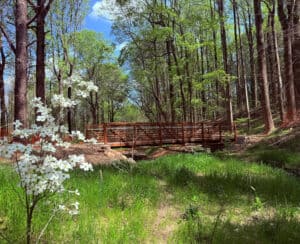
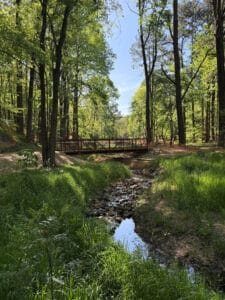
The Preserve encircles streams, wetlands, and forest across forty acres within the Park, inviting visitors to learn and engage with the beauty and art of the surrounding natural landscape. The opening of the new Jane B. Preyer Preserve is part of a multiphase project to restore the stream system in the Museum Park, replace a series of bridges and aging stormwater infrastructure, create new trails, and support wildlife habitats with new native plantings. Together, these efforts will improve water quality, enhance the visitor experience, and ensure the long-term sustainability of the Museum Park.
Rachel Woods, director of the Museum Park, remarks, “When complete, the Stream Restoration Project, located within the Preyer Preserve, will result in a beautiful ecological haven in the forested portion of the Park. The Preserve creates an ecological strategy to steward the Museum Park, and the many generous donations made to support this project will preserve this respite in nature for future generations.”
Thanks to generous funding from individuals and institutional donors, and most notably through a transformative gift made by Marilyn Jacobs Preyer and L. Richardson Preyer, the Preserve is named to honor the impact Jane B. Preyer made on environmental conservation across North Carolina and the Southeast. Jane B. Preyer was the director of the southeastern office of the Environmental Defense Fund (EDF) until 2017. In that role, she was senior advisor for policy and political strategy, helping pass effective environmental policies in the Southeast. Prior to EDF, Ms. Preyer played professional tennis, ultimately achieving a global rank of 43rd before coaching women’s tennis at Duke University, where she was named an ACC Coach of the Year; she also has been inducted into the NC Tennis Hall of Fame and the Southern Tennis Hall of Fame. Museum Trustee and lead donor Marilyn Jacobs Preyer states, “This project demonstrates the Museum’s commitment to environmental sustainability while also honoring Jane’s impact on ecological advocacy and deep commitment to public service. We are thrilled to celebrate her legacy in perpetuity by the naming of this acreage in the Ann and Jim Goodnight Museum Park.”
The first phase of the Stream Restoration Project, completed in 2025, restored the balance between the unnamed tributary and its surrounding environment, enhancing water quality and riparian and aquatic habitats. Through the generosity of the Preyer Family and other donors, the Museum will create new paths for Park visitors and new bridge crossings to provide visitors immersive experiences in nature. The second phase of the project will restore and stabilize House Creek, located downstream from the unnamed tributary in the forested southeastern section of the Park. This stabilization will prevent further erosion and tree loss along the streambank and improve water quality onsite and downstream. Native plantings along the stream will create enhanced habitat for a variety of wildlife. The project’s third phase will replace antiquated stormwater devices and deteriorated infrastructure with a sustainable, natural stormwater conveyance system. Newly planted wetlands and the creation of a series of step pools will reduce water velocity and flooding downstream and provide visitors with a more engaging landscape to view from the Blue Loop, a 1.5-mile trail that weaves around the center of the Museum Park.
All projects underway in the Museum Park will reduce flooding, increase climate resiliency, enhance habitat for wildlife, and improve water quality within the Museum Park and downstream. New stream crossings and trails will offer visitors increased access to nature, reinforcing the Museum Park’s role as a welcoming, outdoor respite in the rapidly urbanizing Triangle. Educational content and programming will also increase public awareness of environmental issues, making the Museum Park a place to discover nature and enjoy art for more than 1.2 million annual NCMA campus visitors.
# # #
About the North Carolina Museum of Art
The North Carolina Museum of Art’s collection spans more than 5,000 years, from antiquity to the present, making the institution one of the premier art museums in the South. The museum’s collection provides educational, aesthetic, intellectual and cultural experiences for the citizens of North Carolina and beyond. The 164-acre Museum Park showcases the connection between art and nature through site-specific works of environmental art. The museum offers changing special exhibitions, classes, lectures, family activities, films and concerts. The museum is located at 2110 Blue Ridge Rd. in Raleigh and is home to the People’s Collection. It is the art museum of the State of North Carolina, under the auspices of Gov. Josh Stein; an agency of the Department of Natural and Cultural Resources, guided by the direction of Secretary Pamela B. Cashwell; and led by Interim Director Katherine White. For more information, please visit ncartmuseum.org.
About the North Carolina Department of Natural and Cultural Resources
The N.C. Department of Natural and Cultural Resources (DNCR) manages, promotes and enhances the things that people love about North Carolina—its diverse arts and culture, rich history, and spectacular natural areas. At more than 100 sites across the state, the department enhances education, stimulates economic development, improves public health, expands accessibility and strengthens community resiliency. For more information please visit dncr.nc.gov.