Bacchus Conservation Project
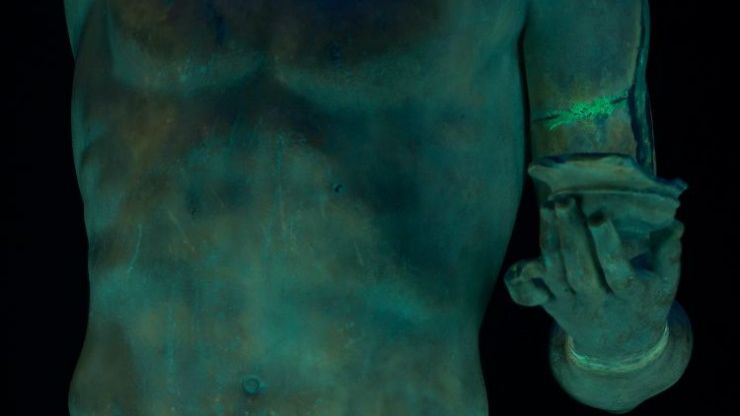
Scholarly interest in the NCMA’s Statue of Bacchus arose in the 1960s when classical art experts identified it as a patchwork, comprising a rare 2nd-century Roman torso, a head from a different ancient statue, and limbs, hair locks, berries, and leaves that were put together in the late 16th or early 17th century. Scholars strongly advocated for the complete derestoration of Bacchus, which could not be accomplished at the time. The derestoration began in the mid 1980s with the removal of the head, with a second phase in 1990 to remove the berries, leaves, and locks of hair from it. The treatment, however, did not extend to the rest of the sculpture. The Bacchus Conservation Project was established in 2013 to study the sculpture, understand how it was put together, trace its history, and complete the derestoration begun decades ago.
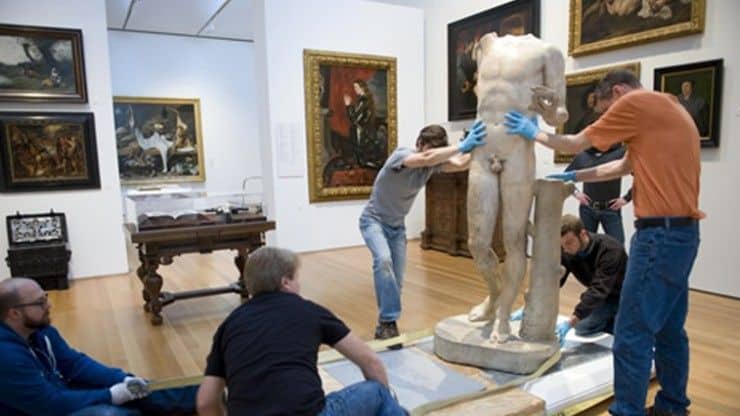
The original derestoration project has made an about-face, based on compelling scientific, engineering, conservation, and curatorial data obtained over the last few months. There are more fragments from ancient quarries than previously thought, and displaying each separately does not make much sense. Together, these fragments create a wonderful statue of the Roman god of wine, probably put together in the late 16th or early 17th century. The recent discoveries make the composite sculpture more interesting as a whole, even though there is still that rare 2nd-century Roman torso embedded in it.
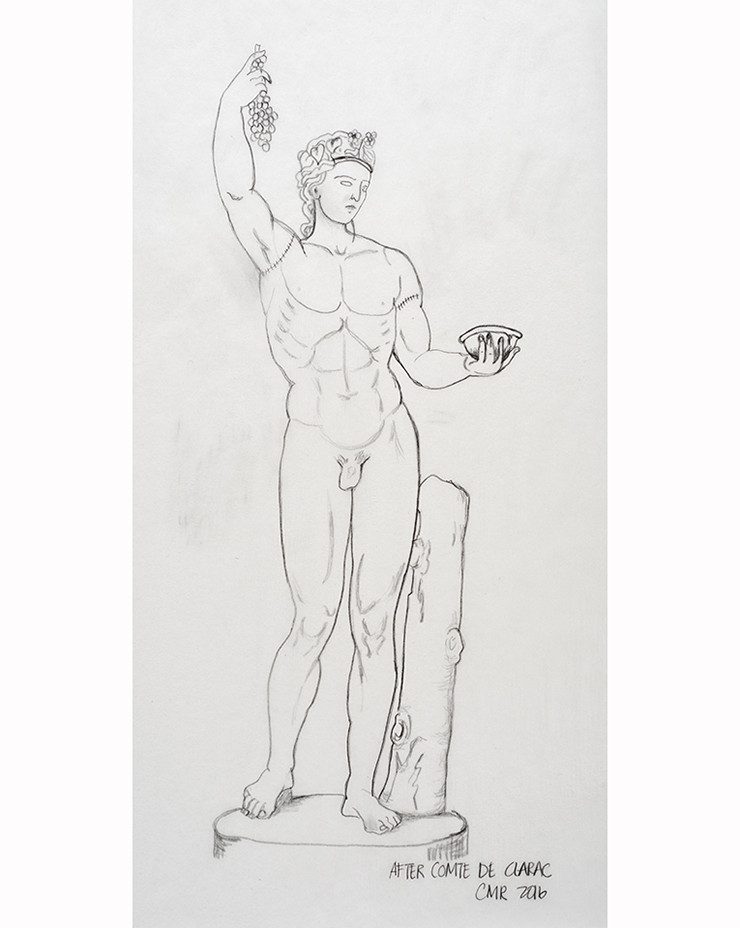
The Bacchus project team reformulated the conservation treatment and the interpretive strategy for the display of this fascinating composite statue in the Museum’s Classical Gallery. Instead of a derestoration, the project is now a re-restoration aimed at bringing Bacchus back to its original appearance. The sculpture will be consolidated, and the head—newly adorned with the old berries, leaves, and hair locks—will be reattached to the body. The right arm, missing since before the statue came to the Museum but known (from an old photo and an 1837 drawing) to have been held aloft holding a bunch of grapes, will be created and attached to the sculpture, following reversible conservation standards and procedures.
About the Project
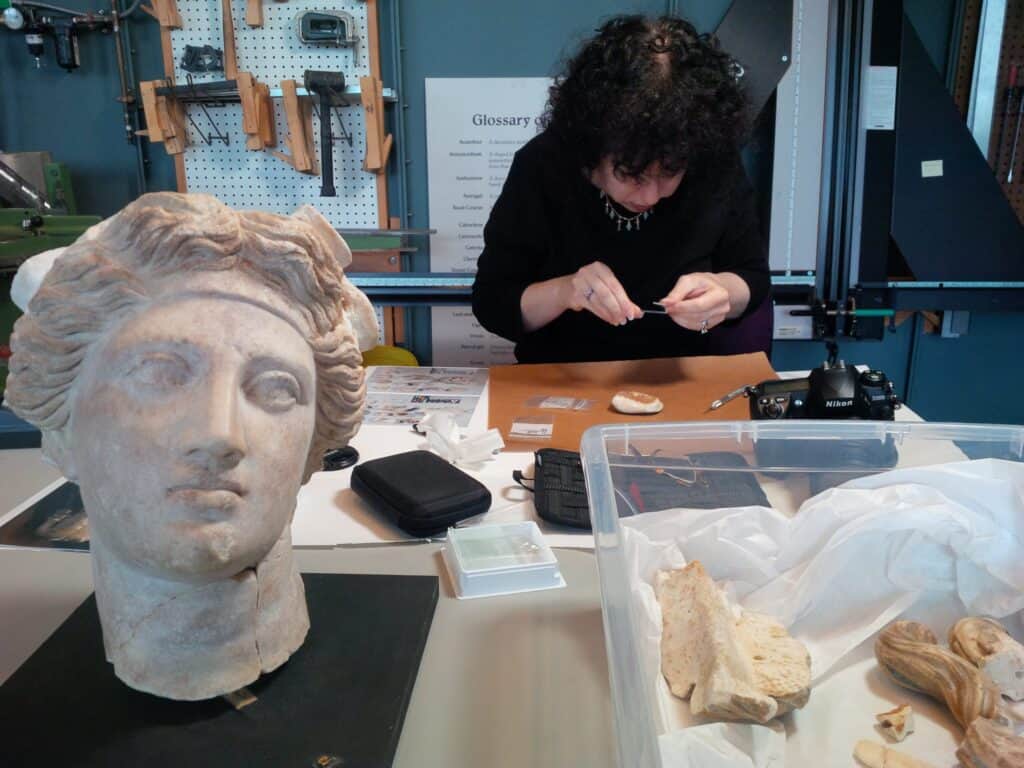
The Bacchus Conservation Project is a multidisciplinary and multiphase endeavor that has involved curators, conservators, classicists, art historians, geologists, engineers, 3-D specialists, artists, and even a basketball player. In addition to historical research, scientific analysis, and conservation treatment, the project includes a special exhibition, a catalogue, and public programming.
The Bacchus Conservation Project is made possible by:
Bank of America

The Institute of Museum and Library Services (MA-30-16-0264-16)

Additional support provided by Steve and Frosene Zeis and Don Davis and Peggy Wilks.
Support for collection research and initial study of the statue of Bacchus is made possible by Ann and Jim Goodnight/The Andrew W. Mellon Foundation Fund for Curatorial and Conservation Research and Travel.
Highlights
-
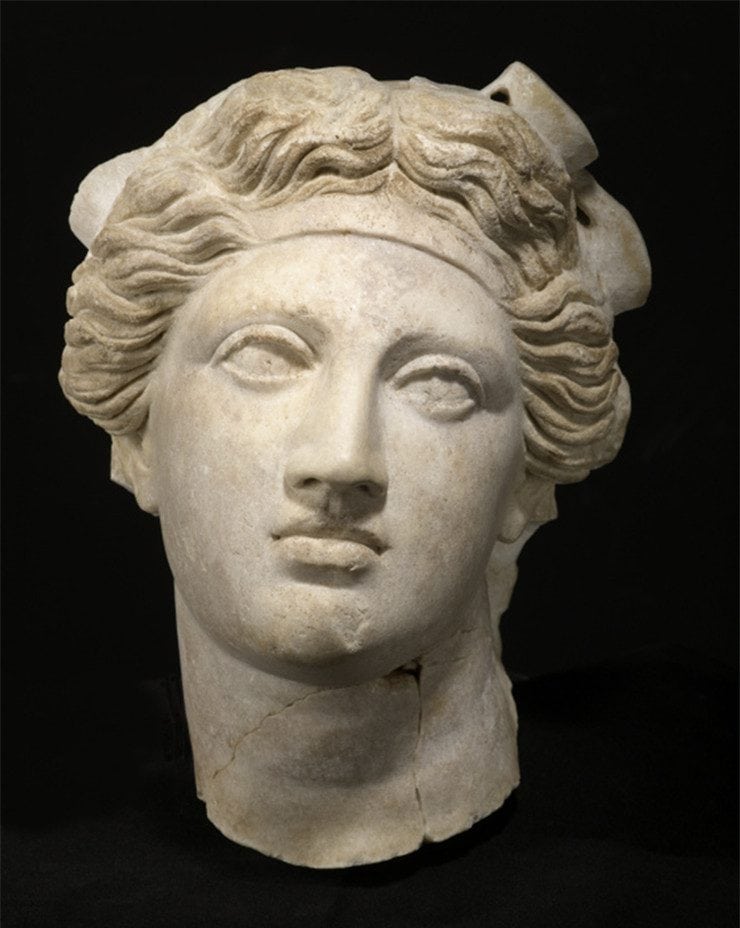
Inv. no. G.58.2.1
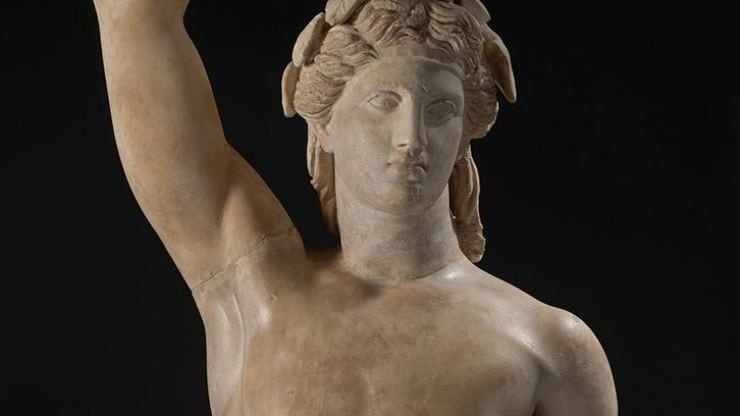
The head from a now-lost Roman marble sculpture of a Greek Dionysos, dated to the 1st–3rd century, was used to create the composite Statue of Bacchus more than 400 years ago. Removed from the composite sculpture in the 1980s, it will be reattached during upcoming conservation treatment.
-
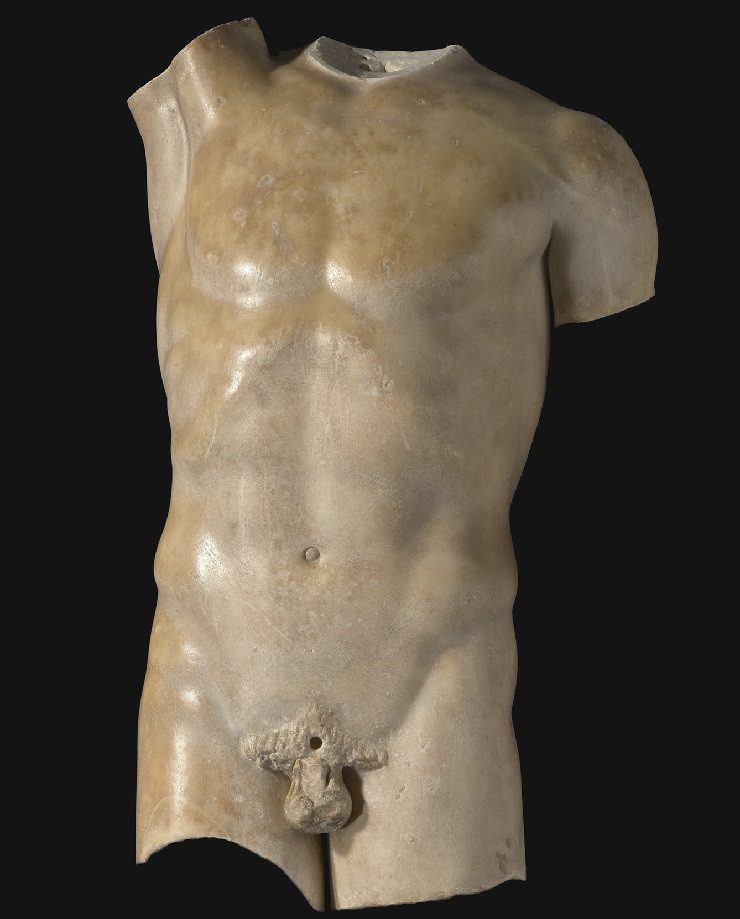
Inv. no. G.58.2.2
The beautiful and rare 2nd-century Roman torso that started it all! Using Photoshop, we extracted it to show what it would have looked if separated from the rest of the sculpture. In the late 16th or early 17th century, the torso was used as the core for a new statue.
-
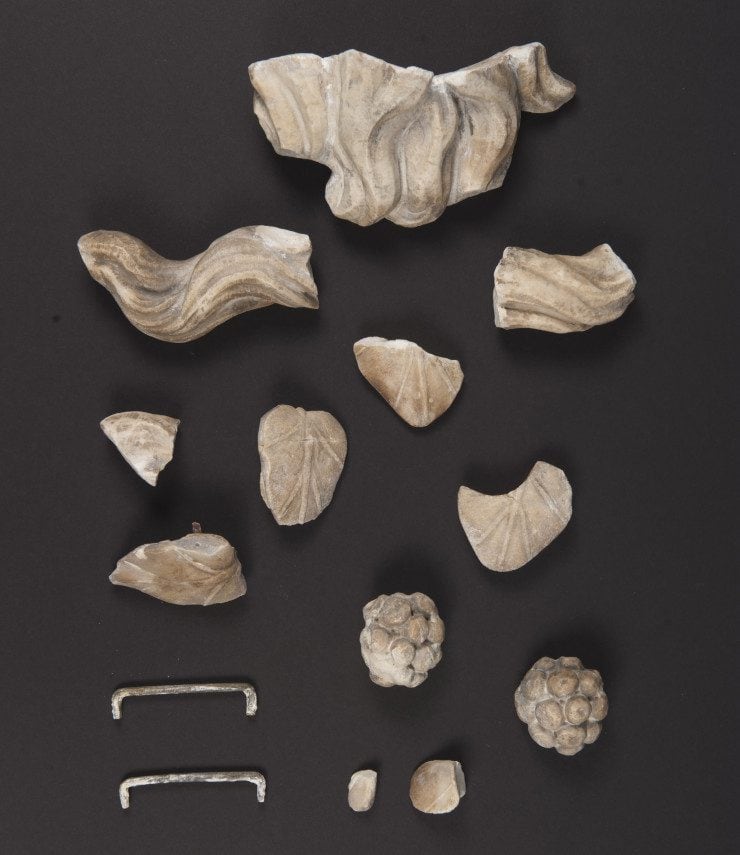
Modern and Contemporary Galleries
Long locks of hair, berries, and leaves were added to the Head of Dionysos when the sculpture was created in the late 16th or early 17th century. They were removed from the head in 1990 because they were not ancient. (True, but they are still old! We’ll add them back.)
-
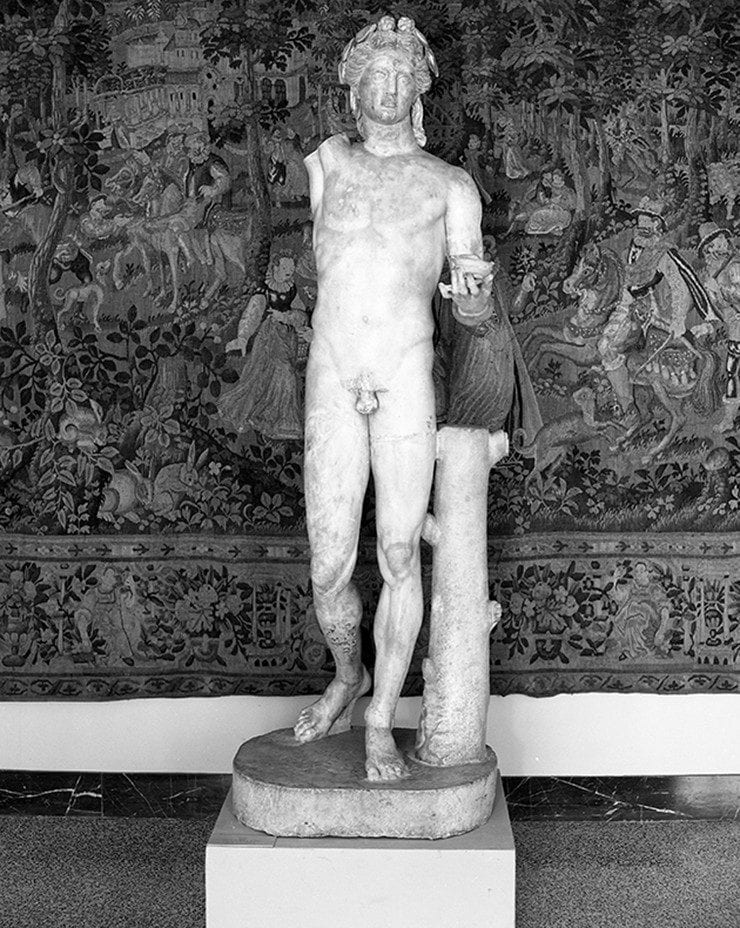
Inv. no. G.58.2.3
This is how the Statue of Bacchus looked when it was displayed in the 1950s, when the NCMA was in downtown Raleigh. With the berries and leaves in his hair and the cup in his left hand, the figure can be identified as Bacchus. Imagine how more eloquent the statue will be with a new right arm holding grapes! (The addition will be reversible, should later generations wish to remove nonoriginal parts.)
-
The Museum Park
A drawing of the Statue of Bacchus published in the 1830s shows what he looked like before he lost his arm. (While doing research we found out this happened between 1945 and 1949.) The drawing and an old photograph are the inspiration for the new arm. Pictured is Caroline Rocheleau’s sketch of the published drawing.Enjoy 4.7 miles of trails, public art, gardens, and outdoor experiences in the Ann and Jim Goodnight Museum Park.
Behind the Scenes
The Bacchus Conservation Project is a multidisciplinary and multiphase endeavor. Take a look at the slide show to see the exhibition history of the sculpture and view images of the preliminary phases of the systematic study of the classical marble sculptures. Visit often to see Bacchus transform before your eyes!
Details
The NCMA communications team is happy to work with members of the press to coordinate interviews, schedule photo shoots, and provide images. Email Lizzie Newton, Director of Marketing & Communications, at lizzie.newton@dncr.nc.gov.”