




- The Museum Park is open free to the public from dawn to dusk.
- Welcome Center restrooms are open daily dawn to dusk. Food and retail hours are seasonal, with the current hours of Wednesday–Sunday, 10 am–5 pm.
- A Cardinal Bikeshare kiosk is located at the Reedy Creek Road entrance. Rent a bike to ride the paved trails.
- Bus stops are located at both Reedy Creek Road and District Drive entrances. See the Go Raleigh Blue Ridge Road Bus Schedule.
- Bike or walk to the Museum Park via the Capital Area Greenway.
- Construction and trail closures:
- Work is underway in the southeast corner of the Ann and Jim Goodnight Museum Park as part of the I-440 improvement project. All work is taking place in the right-of-way and not on Museum Park property. The project is expected to be completed in the fall of 2022. If you have any questions, please visit the NC Department of Transportation website.
- The DHHS, COR, and DOT will begin work along Blue Ridge Road effective August 2022, ending in 2025. We will do our best to provide updates of major disruptions as we know of them. We look forward to these positive contributions planned for the Blue Ridge corridor.
NCMA Park App
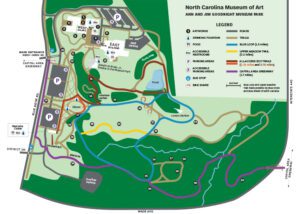
Explore featured art, nature, and campus history tours, audio descriptions, GPS navigation of the Museum Park, and more. Learn about the NCMA Park App here.
All-Access Eco Trail
The All-Access Eco Trail is designed using integrated access to enhance visitors’ experiences of the Park’s native plants, wildlife, and habitats.
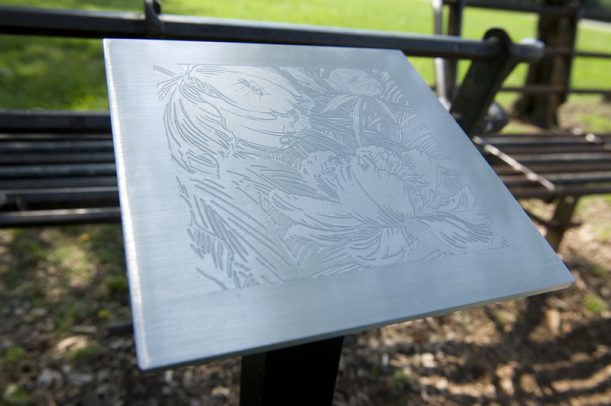
Each stop on the trail features audio-described stories about the Park’s natural features and sensory exploration prompts paired to each sign. The signs include large print, braille, and touchable images. On the bottom left side of each sign is a mini-map that displays the path to the next stop.
The trail consists of two options that both begin at the Welcome Center. The longest route is approximately three-quarters of a mile in one direction and contains 13 stops that conclude at the Park’s pond. For a shorter experience, follow three signs that end at the Ellipse. This route is wheelchair accessible and approximately one-quarter of a mile on paved, mostly level pathways.
Access the Eco Trail audio descriptions on the NCMA Park app, available from Apple’s App Store and at ncmapark.org (web version for Android), or on SoundCloud.
Birds of the Museum Park
Make connections between art and nature with this checklist of birds that have been observed, seasonally, in the Museum Park.
Endangered Species
Celebrate the 50th anniversary of the Endangered Species Act (ESA) (fws.gov/law/endangered-species-act) with this scavenger hunt!
Scavenger Hunt
Explore the Museum Park through the Art + Nature + People scavenger hunt. This interactive activity takes you throughout our 164-acre Park and encourages creative experiences and human interactions for all ages. To use, download the PDF, grab a hard copy from the Museum Park Welcome Center, or request one from our Park rangers when you visit.
Recreation
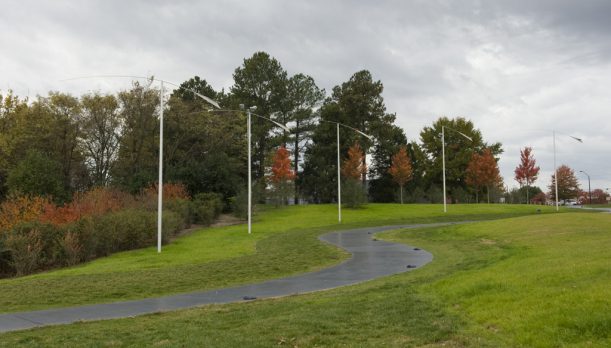
The Museum Park has 4.7 miles of recreational trails that lead visitors through natural areas to commissioned works of art. Trails in the Park are made of both paved and unpaved surfaces. Designed for hiking, walking, and jogging only, the unpaved natural trails allow visitors to deeply experience art and nature. Cyclists and self-propelled wheeled vehicles may travel on paved trails only. The Capital Area Reedy Creek Greenway system is a paved multi-use pathway that runs through west Raleigh and connects the eastern portion of the Park, Meredith College, North Carolina State University, and downtown Raleigh via the pedestrian bridge over 440. In the opposite direction, the Greenway exits from the Park and continues to Umstead State Park.
Park rules protect visitor safety, works of art, and the environment.
Public Safety
- It is unlawful to possess firearms or other weapons on Museum grounds.
- Fireworks, cap pistols, air guns, bows and arrows, slingshots, and lethal projectiles of any kind are strictly prohibited.
- Possession or consumption of alcoholic beverages is prohibited except during Museum-organized events.
- Drones or other mechanical flying devices are prohibited.
- Unauthorized motor vehicles are prohibited on Park trails.
- Overnight camping, charcoal grills, and fires are prohibited.
- Gatherings in the Park cannot involve the use of confetti, paper poppers, etc.
Bikes and Pets
- Cyclists and skateboarders must yield to pedestrians and be courteous of other trail users.
- Cyclists should give an audible signal when passing.
- Speed limit for trail users is 10 mph.
- Pets must be on leash.
- Owners are required to clean up after their pets. Deposit pet waste in available trash receptacles.
- Owners may be asked to remove aggressive or noisy pets.
Art and the Environment
- Do not climb on or touch works of art in the Park, unless otherwise indicated, and stay on trails.
- Do not disturb natural areas. Removal or injury of any plant in the Park is prohibited.
- Carry all trash to a receptacle or out of the Park.
- Metal detectors are not permitted.
- Commercial business activity, including photography and video recording, is permitted only with prior authorization.
- It is prohibited to remove, destroy, or damage plant life or property.
- It is prohibited to kill, trap, or harm wildlife.